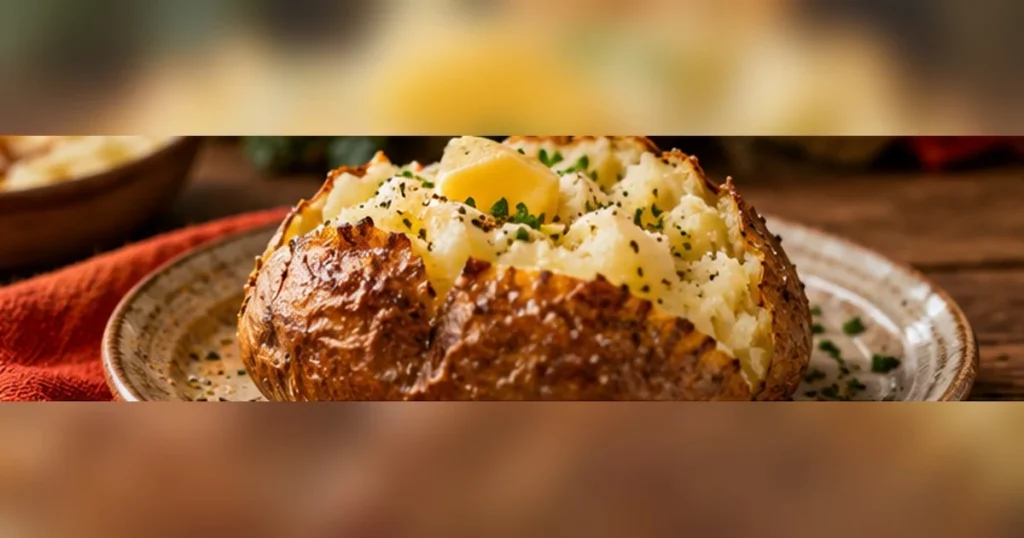
A great baked potato has two clear textures: crisp, salty skin and a soft, steamy center. When the skin turns soft or the middle feels dense, the issue is usually the potato type, surface moisture, oven heat, or how the potato is handled after baking.
Choose the right potato first
Russet potatoes are a strong choice because they have more starch and less moisture than waxy potatoes. That helps the inside turn light instead of creamy or dense.
Pick potatoes that feel firm and are close in size. Similar sizes finish at about the same time, which makes a batch much easier to manage.
Why baked potato skin turns soft
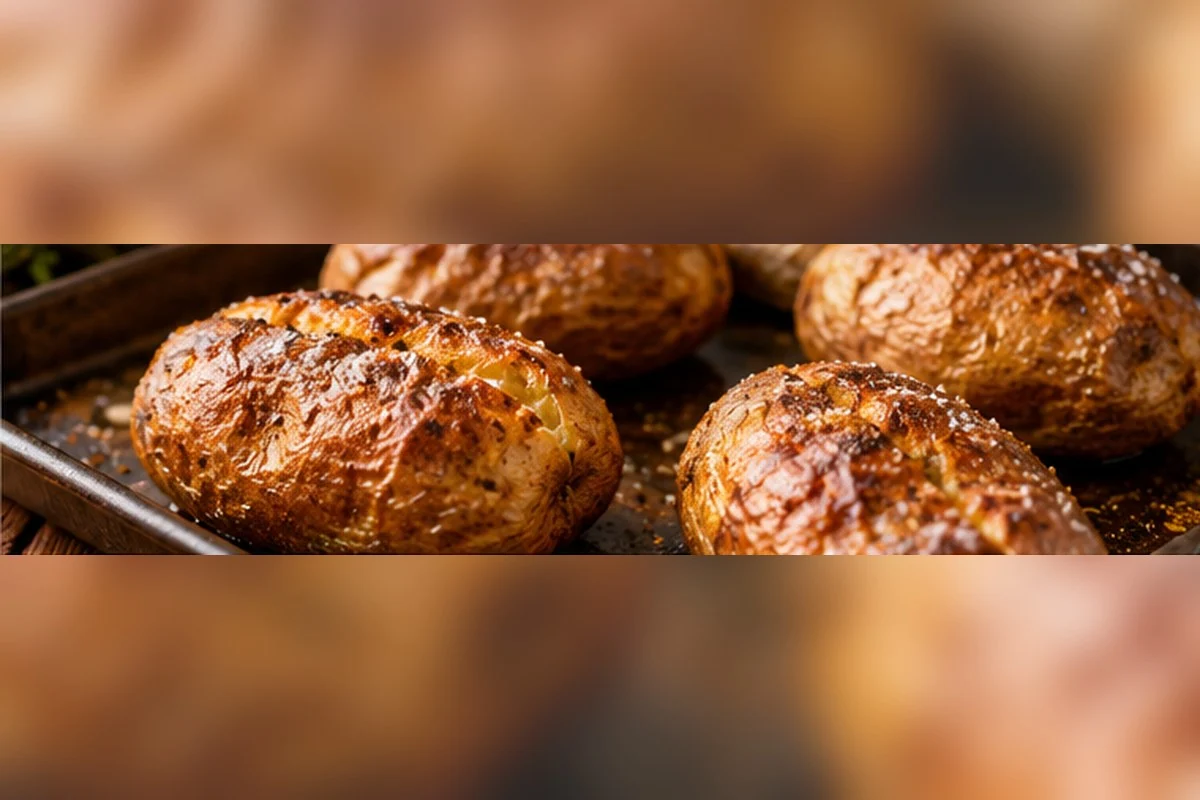
Soft skin is often caused by trapped steam. Foil is useful when you want moist skin, but it works against a crisp finish. For a classic crispy baked potato, bake it uncovered.
- Wash the potato and dry it fully.
- Prick the skin a few times with a fork.
- Rub it lightly with oil.
- Season the outside with salt.
- Place it directly on a rack or on a rack set over a tray.
The best oven method for a fluffy center
Heat the oven to about 425°F or 220°C. Bake until a knife or skewer slides into the center with very little resistance. Large potatoes may take around 50 to 70 minutes.
Do not judge by time alone
Potato size, oven accuracy, and starting temperature all matter. If you have an instant-read thermometer, a fully baked potato is often close to 205°F to 210°F in the center.
Once it is done, cut a slit in the top. Gently squeeze the ends toward the middle. This releases steam and opens the fluffy center.
Why the inside becomes gummy
A gummy baked potato is often undercooked or allowed to sit sealed for too long. The starch needs enough heat to soften. Then the steam needs somewhere to go.
If the center still feels firm, return the potato to the oven. If it is fully cooked but dense, split it sooner next time and fluff the center with a fork instead of pressing it down.
Should you microwave before baking?
You can. A short microwave start can save time, then the oven can finish the skin. The trade-off is that the texture may be slightly less dry and fluffy than a potato baked fully in the oven.
This method is useful on busy nights. For more quick dinner help, see our 20-minute dinner ideas.
Baked potato troubleshooting table
| Result | Likely cause | Next time |
|---|---|---|
| Soft skin | Foil or trapped steam | Bake uncovered |
| Gummy center | Undercooked potato | Bake until fully tender |
| Dry center | Overbaked or held too long | Check earlier |
| Uneven batch | Mixed potato sizes | Choose similar sizes |
| Bland skin | No seasoning | Oil lightly and salt before baking |
Helpful video: tested baked potato methods
Kitchen Sanctuary compares several methods and shows a simple way to build a crisp outside and fluffy center.
Easy serving ideas
Keep toppings simple so the potato stays the focus. Butter, Greek yogurt or sour cream, chopped chives, cheddar, black pepper, and leftover chili all work well. If you have chili ready, our chili troubleshooting guide can help you fix the texture before you spoon it over the potato.
FAQ
Do I need to wrap baked potatoes in foil?
No. Foil gives you a softer skin. Leave the potato uncovered when you want a crisp skin.
Why should I prick the potato?
The small holes give steam a path out. A few fork pricks are enough.
Can I reheat a baked potato and keep the skin crisp?
Yes. Reheat it in an oven or air fryer instead of a microwave. Dry heat does a better job of bringing the skin back.