Knowing the calories in common foods can make meal planning feel less confusing. A quick reference helps you compare portions and understand where energy comes from. Still, calorie numbers are only one part of a food’s value. Protein, fiber, vitamins, minerals, and how satisfying a meal feels matter too.
Use this guide alongside the Recipe Snippets calorie calculator and browse the recipe collection for meal ideas you can make at home.
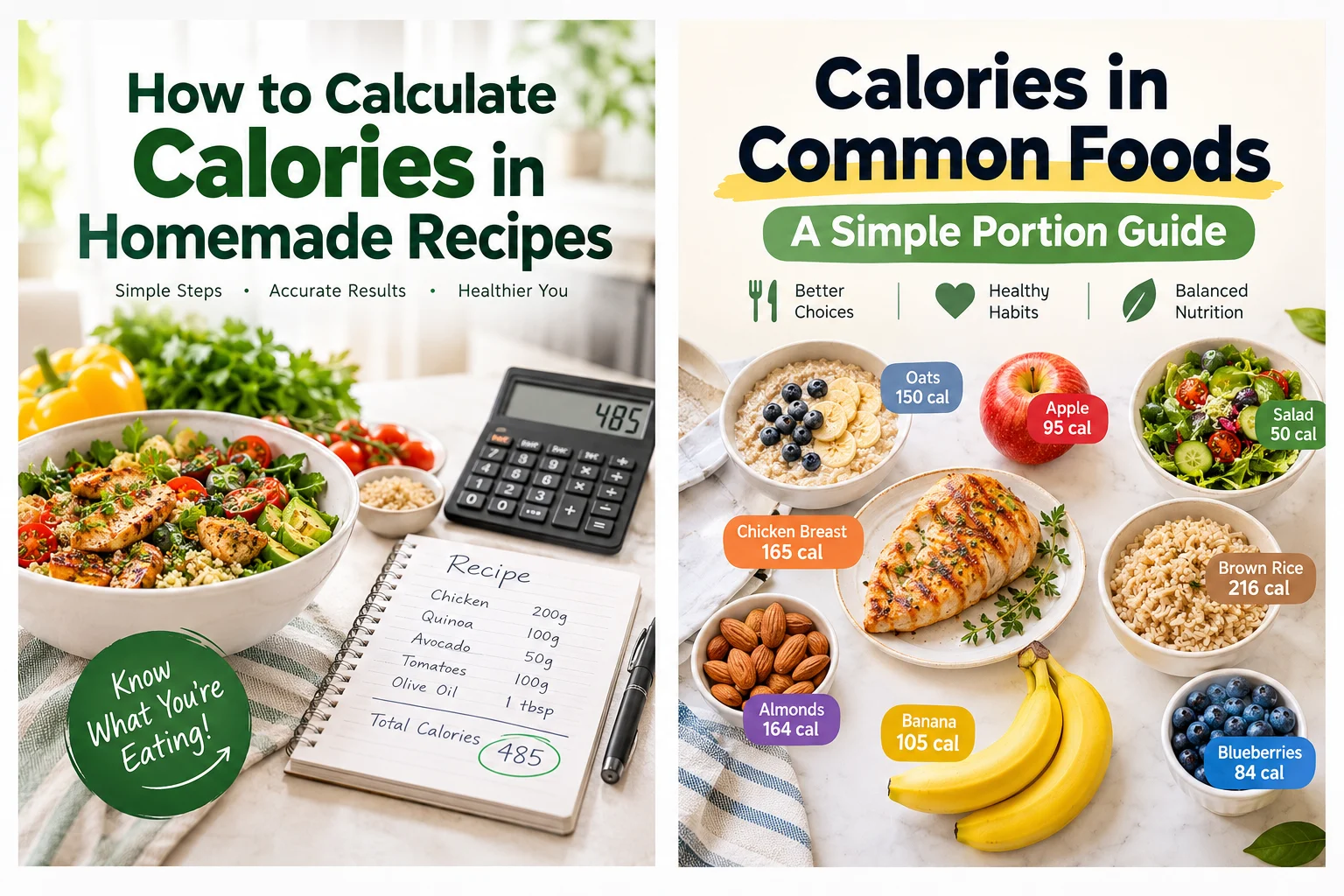
Calories in common foods at a glance
The table below lists approximate calories for common serving sizes. These are general estimates, not exact values for every brand or preparation method. A larger portion, added oil, dressing, sugar, or sauce can change the total.
| Food | Typical serving | Approximate calories |
|---|---|---|
| Apple | 1 medium | 95 |
| Banana | 1 medium | 105 |
| Blueberries | 1 cup | 84 |
| Almonds | 1 oz (28 g) | 164 |
| Boiled egg | 1 large | 78 |
| Cooked broccoli | 1 cup | 55 |
| Carrots | 1 cup, chopped | 52 |
| Brown rice | 1 cup, cooked | 216 |
| Chicken breast | 100 g, cooked | 165 |
| Cheddar cheese | 1 oz (28 g) | 113 |
| Dark chocolate | 1 oz (28 g) | 170 |
| Avocado | Half a medium fruit | About 120 |
Fruit: a simple way to add variety
Fruit provides carbohydrates, water, and different vitamins and plant compounds. An apple, banana, or cup of berries can be an easy snack. The calories vary with size, so a large banana may contain more than a small one. Dried fruit is more concentrated by weight because much of its water has been removed.
Try fruit with yogurt or oats for a more filling snack. For breakfast ideas, see the breakfast bowl collection or explore healthy pudding recipes.
Protein foods: look at the full meal
Eggs, chicken, fish, beans, yogurt, tofu, and other protein foods can help make meals satisfying. The calories depend on the cut, portion, and cooking method. For example, grilled chicken cooked with little added fat will differ from breaded chicken fried in oil.
Eggs are easy to pair with toast or vegetables. Browse egg breakfast recipes for simple ways to build a meal. If you use a nutrition label, check the serving size and whether the values refer to raw or cooked food.
Grains and starchy foods: measure the portion
Rice, oats, bread, pasta, potatoes, and other starchy foods provide energy. Their calorie values can look very different depending on whether you measure them dry or cooked. Rice absorbs water as it cooks, so one cup of cooked rice weighs more than a cup of dry rice and has a different calorie total.
For the clearest estimate, choose a food entry that matches how you measured it. If you weigh dry pasta, use dry-pasta nutrition data. If you weigh the cooked pasta on your plate, use a matching cooked entry when available.
Vegetables: preparation changes the total
Many non-starchy vegetables are relatively low in calories and add volume, color, and texture to meals. Broccoli and carrots are common examples. The calories rise when you add oil, butter, cheese sauce, or a rich dressing. That does not mean you must avoid those ingredients; simply include them when estimating the meal.
Nuts, oils, and toppings deserve attention
Nuts, seeds, oils, and cheese can add flavor and nutrients, but they are energy-dense. A small handful of almonds has a different calorie total from a large handful. Measuring these foods for a short time can help you learn what your usual portion looks like.
Do not treat higher-calorie foods as automatically bad. The goal is to understand portions and build meals that suit your needs, preferences, and budget.
How to use a food calorie guide well
- Start with the portion you actually eat. A label or table is only useful when the serving size matches yours.
- Check the preparation method. Raw, cooked, fried, roasted, and drained versions may have different values.
- Include extras. Count dressings, spreads, cooking oil, sauces, and drinks if you want a fuller estimate.
- Compare like with like. Use the same unit and preparation state when comparing two foods.
- Think beyond calories. Consider protein, fiber, variety, enjoyment, and how the meal fits your day.
Estimate calories in a homemade meal
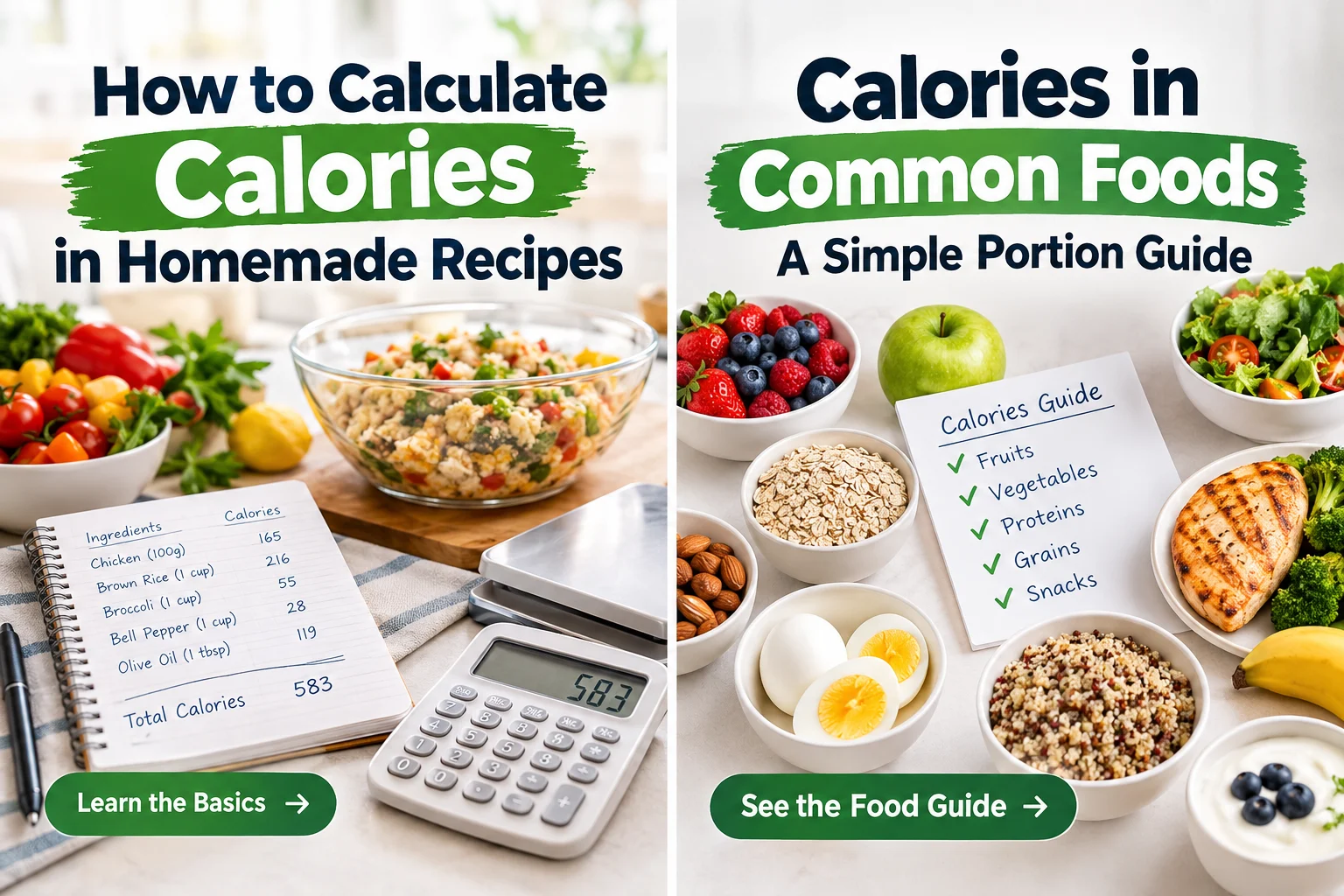
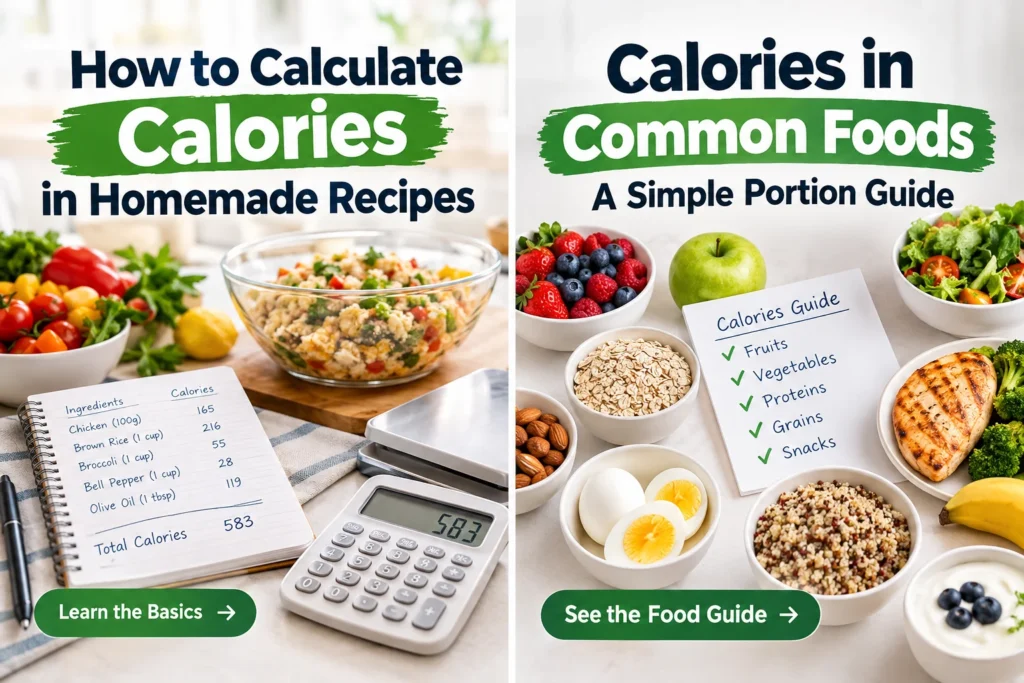
Suppose lunch includes cooked chicken, brown rice, broccoli, and a spoonful of oil. Look up the calories for each amount, add the values, and record the result for the whole plate. If you cook several portions at once, calculate the full recipe and divide it into the number of portions you serve.
The calorie calculator page can help you explore calorie estimates, while the Recipe Snippets blog offers more cooking guides. For a different meal idea, browse the breakfast wrap category.
Frequently asked questions
Are the calorie values exact?
No. Food size, brand, ripeness, and preparation can change the numbers. Use the values as a guide and check package labels when available.
Should I avoid foods with more calories?
Not necessarily. Foods with more calories can still provide useful nutrients and enjoyment. Portion size and your overall eating pattern matter more than judging one food by its calorie number alone.
Why do cooked and uncooked values differ?
Cooking changes water content and sometimes adds or removes fat. Use a nutrition entry that matches the food’s state and the way you measured it.
Build a useful, balanced food routine
A calorie guide works best as a reference, not a list of strict rules. Choose a mix of foods you enjoy, pay attention to portions when useful, and make room for variety. Save the foods you eat often so future estimates are faster, and use the Recipe Snippets recipes to find new meals to try.
This article is for general education and does not replace personal medical or nutrition advice. If calorie tracking causes distress or you need a plan for a medical condition, seek guidance from a qualified healthcare professional or registered dietitian.