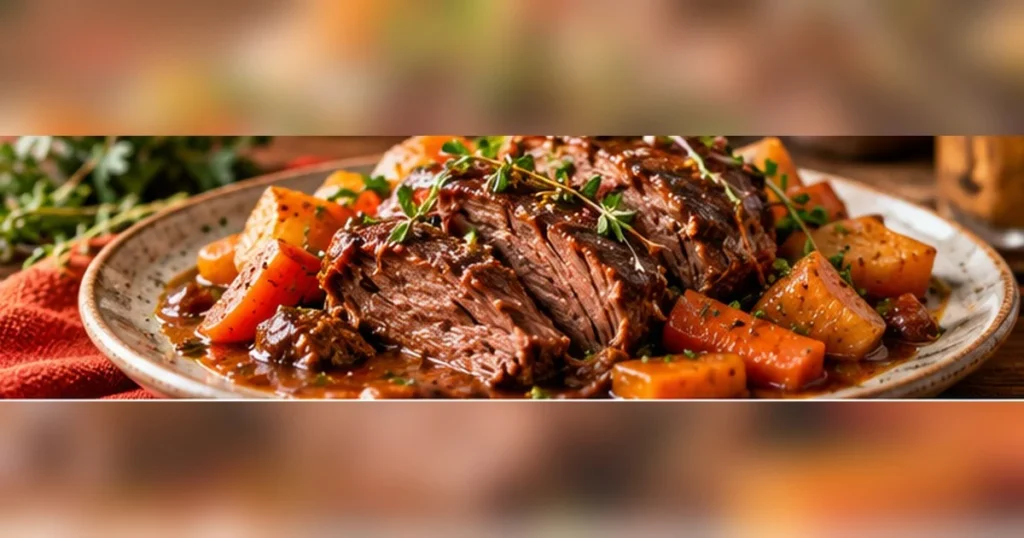
Pot roast can be confusing. A roast may feel tough after two hours, so it looks overcooked. In many cases, it needs more time, not less. The goal is to give collagen time to soften while keeping enough moisture around the meat.
Start with the right cut
Chuck roast is one of the easiest cuts for pot roast because it has fat and connective tissue. Those parts melt slowly and help the meat feel rich and tender.
Very lean roasts can work, but they give you less room for error. If you want the classic fall-apart texture, choose a roast with visible marbling.
Why pot roast stays tough
Pot roast needs time at a gentle temperature. Connective tissue does not become tender the moment the meat reaches a safe cooking temperature. It needs a longer cook so the collagen can turn soft.
The fork test matters more than the clock
Push a fork into the thickest part and twist. If the meat fights back, keep cooking. Check again later. The roast is ready when the fibers separate with little effort.
Why pot roast turns dry
Dryness can come from three common problems:
- The cut is too lean.
- The cooking temperature is too high.
- The roast keeps cooking long after it is already tender.
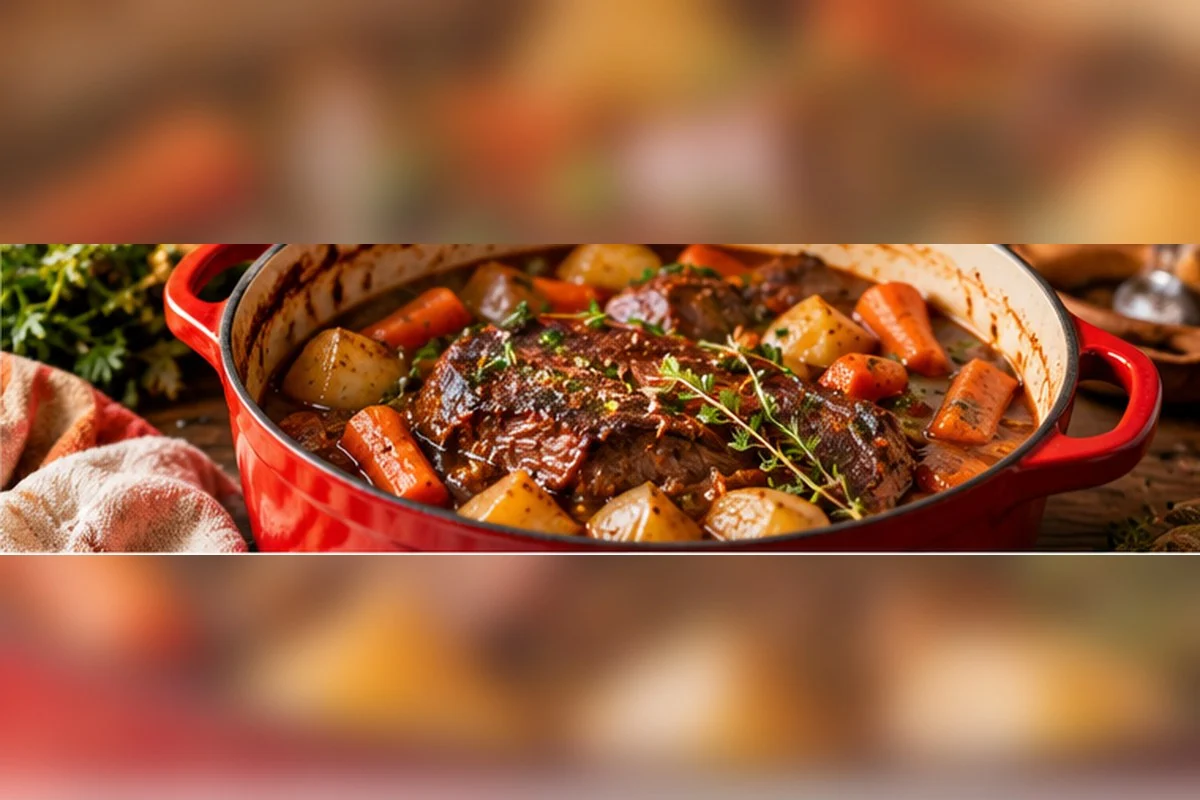
Keep the heat steady and low. You want a gentle braise, not a hard boil. The cooking liquid should come partway up the roast rather than cover it like soup.
Brown the meat before braising
Browning creates roasted flavor on the surface. Pat the meat dry first. Season it, then sear it in a hot pan with a small amount of oil. Brown several sides before adding the liquid.
After the roast is browned, cook onion or garlic in the same pot. Add tomato paste if you like a deeper gravy. Then loosen the browned bits with stock, water, or another cooking liquid.
When to add potatoes and carrots
Vegetables can become too soft if they cook as long as a large roast. Add large pieces later in the cook if you want them to hold their shape. If you like very soft vegetables, add them earlier.
Pot roast problem and fix table
| Problem | Most likely reason | Fix |
|---|---|---|
| Tough meat | Not enough cooking time | Keep braising gently |
| Dry meat | Lean cut or too much heat | Use chuck and lower heat |
| Thin gravy | Too much liquid | Reduce the liquid after cooking |
| Bland gravy | Weak base | Brown meat and aromatics well |
| Mushy vegetables | Added too early | Add them later |
How to fix thin pot roast gravy
Move the cooked roast and vegetables to a plate. Simmer the liquid uncovered until it reduces. If you need more body, whisk a small amount of cornstarch with cold water, then add it to the simmering liquid. Stop when the gravy lightly coats a spoon.
Helpful video: step-by-step pot roast
Rachel’s Step by Step shows the full process, including browning, seasoning, vegetables, and a slow oven cook.
Plan the meal around the roast
Pot roast is a good weekend meal because most of the work happens before the long cook. For another cold-weather dinner, try our chicken noodle soup flavor guide. If you want a faster backup plan, browse these lazy fall meals.
FAQ
Can I cook pot roast in a Dutch oven?
Yes. A heavy Dutch oven holds heat well and keeps moisture close to the roast. It is one of the best tools for a slow braise.
Should pot roast be covered in liquid?
No. A braise usually uses enough liquid to come partway up the meat. Full coverage can make the flavor more like boiled beef.
Why did my roast get tough after cooling?
Cold fat and gelatin become firm. Reheat the roast slowly with some of its cooking liquid and it should soften again.